
What Is the Difference Between a Coin and a Token?
A coin runs on its own blockchain. A token is built on top of someone else's blockchain.
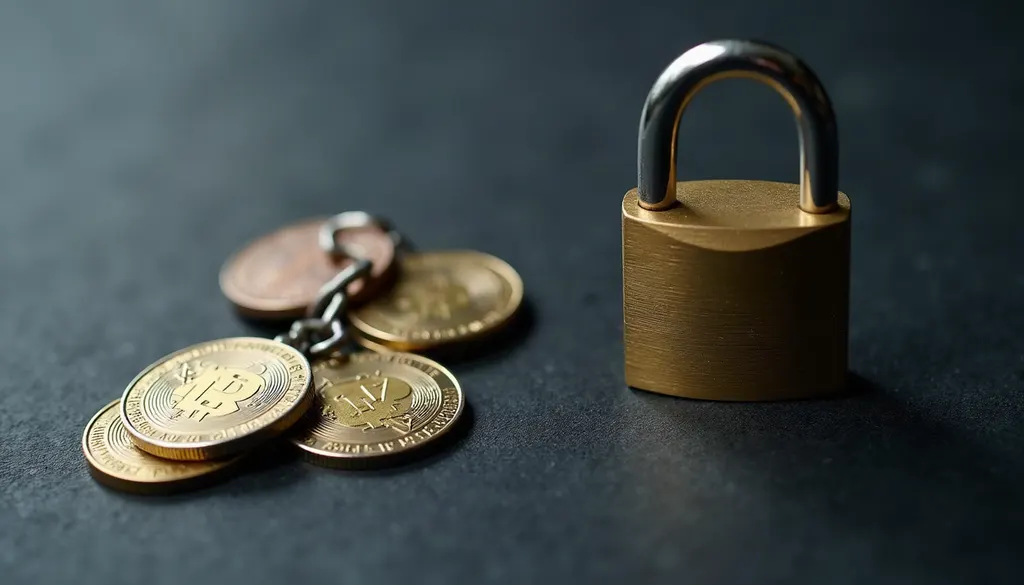
A coin has its own blockchain. A token is built on top of a blockchain that already exists. That single structural difference is the answer to what is the difference between a coin and a token, and almost everything else follows from it: how each one is created, what it can be used for, and what happens when the network underneath it has a problem.
If you are still getting comfortable with the underlying technology, start with our explainer on what a blockchain is and how it works. The rest of this guide assumes you know that a blockchain is a shared record that many computers keep in sync.
The one-line distinction
A coin is the native asset of a blockchain. It is the thing the network itself uses to pay for transactions and to reward the people who keep the records. Bitcoin (BTC) is the native coin of the Bitcoin blockchain. Ether (ETH) is the native coin of Ethereum. Neither one exists anywhere else.
A token does not have its own chain. It is a piece of code deployed onto an existing blockchain, usually through a smart contract — a program that runs automatically when certain conditions are met. A token lives inside the chain it was deployed on, and it borrows that chain's security, speed, and fee structure.
A useful comparison: a coin is like the electricity a building runs on. A token is like an apartment inside that building. The apartment can be a home, an office, or a storage unit, but it still needs the building's wiring to function.
What a coin is, and when it applies
Coins are the base layer. They do three jobs on their own network. First, they pay transaction fees — the small charge you pay to have a transaction written into the chain. Second, they reward the participants who validate transactions, either through mining or through staking. Third, they act as a unit of account inside that network.
Most coins are created through one of two processes. Mining uses computing power to solve puzzles and add new blocks; Bitcoin works this way. Staking locks up existing coins to help secure the network and pays rewards in return; Ethereum moved to this model. Some coins, like Cardano (ADA) and Solana (SOL), follow one of these two paths as well.
Because a coin is tied to one chain, its value tends to move with the health of that chain. If the network is slow, expensive, or losing users, the coin usually feels it.
What a token is, and when it applies
Tokens are the flexible layer. Because they are just code on an existing chain, they can be designed to represent almost anything: a stablecoin pegged to the US dollar, a voting right in a project, a claim on a real-world asset, or a unique digital collectible.
The most common categories you will run into:
- Utility tokens — grant access to a product or service, like paying for storage or attention.
- Governance tokens — give holders a vote on how a project changes over time.
- Stablecoins — designed to hold a steady value against a currency, such as USDT or USDC.
- Security tokens — represent an ownership stake and may fall under securities rules.
- Non-fungible tokens (NFTs) — each one is unique and cannot be swapped one-for-one.
Tokens are usually issued through a smart contract, and many are launched through an initial coin offering (ICO) or a similar distribution event. Ethereum is the clearest example of a chain that supports both a native coin and thousands of tokens at once.
Side-by-side comparison
| Feature | Coin | Token |
|---|---|---|
| Blockchain | Has its own | Runs on an existing one |
| Primary role | Currency and network fees | Utility, asset, or right |
| How it is created | Mining or staking | Smart contract deployment |
| Pays network fees? | Yes, it is the fee asset | No, it needs the host coin |
| Examples | BTC, ETH, SOL, ADA | USDT, UNI, LINK, SHIB |
| Can it become the other? | Rarely | Yes, if it migrates to its own chain |
One row deserves a closer look: the fee row. A token cannot pay its own transaction fees on most chains. If you want to move a token on Ethereum, you need ETH in your wallet to cover the gas fee. That is why tokens depend on coins, and not the other way around.
How to tell which one you are looking at
Imagine a person named Dana who is reading about a project called RiverPay. The project's website says it has a token called RVP that lets holders vote on which merchants get added next. Dana wants to know whether RVP is a coin or a token.
She asks three questions. Does RVP have its own blockchain? No — the site says it was deployed on Ethereum. Does RVP pay for its own transactions? No — users need ETH for gas. Does RVP represent a right or a utility rather than a currency? Yes — it is a governance vote.
All three answers point the same way. RVP is a token. Here is how the arithmetic of a small purchase would look if Dana bought $500 worth:
| Line item | Amount | Notes |
|---|---|---|
| Purchase of RVP | $500.00 | At a quoted price of $2.00 per RVP, that is 250 RVP |
| Exchange trading fee | $5.00 | 1.00% of $500 = $5.00 |
| Network gas fee (paid in ETH) | $3.00 | Charged in ETH, not in RVP |
| Total cash out | $508.00 | $500 + $5 + $3 |
| Value of RVP received | $500.00 | 250 RVP at $2.00 each |
| Immediate cost drag | $8.00 | $508 spent for $500 of asset, or 1.60% |
The math is simple: $5.00 + $3.00 = $8.00 in costs on a $500 purchase, which is $8.00 ÷ $500 = 1.60%. That drag exists whether the price later rises or falls. If Dana had instead bought ETH directly, she would have skipped the token-level contract risk but still paid the same trading fee and gas.
For a broader view of how fees eat into returns over time, our guide on expense ratios covers the same idea in the fund world.
What people get wrong about coins and tokens
Mistake 1: Treating the words as synonyms. Headlines often say "coin" when they mean any crypto asset. The correction: check whether the asset has its own chain. If it does not, it is a token, no matter what the headline says.
Mistake 2: Assuming tokens are always riskier than coins. Tokens add a layer of smart-contract risk, because a bug in the code can drain funds. But coins carry their own risks, including network outages, miner concentration, and regulatory shifts. The SEC's investor education site notes that digital assets of all kinds can lose value quickly and that fraud is common in the space.
Mistake 3: Thinking a token can pay its own gas. People send a token to a wallet and then cannot move it, because the wallet has no ETH, BNB, or SOL to cover the fee. The correction: always keep a small amount of the host chain's coin in any wallet holding tokens.
Mistake 4: Believing a token can never become a coin. It can. BNB started as a token on Ethereum and later migrated to its own chain, Binance Chain. The reverse — a coin giving up its chain — is far less common.
The risks worth naming out loud
This is educational information, not advice. Crypto assets of every kind carry a real risk of losing money, and some have lost most or all of their value. Prices are volatile, liquidity can vanish, and tokens built on smart contracts can fail because of code bugs, hacks, or abandoned projects.
Regulation is another moving piece. The SEC's crypto assets page explains that whether a given token is treated as a security depends on how it is designed and sold, and that view has shifted over time. Tax treatment matters too: in the US, the IRS generally treats crypto as property, so a sale that produces a gain can create a taxable event. Our piece on how savings interest is taxed walks through the same reporting logic for a simpler asset.
For context on how broader rates affect the money people keep outside crypto, the FDIC's national rate data shows the average savings account paying about 0.40% as of September 2026, while high-yield online accounts sit in the 3.75%–4.50% range. Those are not crypto returns, but they are the baseline any crypto holding is being compared against.
Where this leaves you
The difference between a coin and a token comes down to infrastructure: a coin owns its blockchain, and a token rents space on one. That single fact explains why tokens need the host coin for fees, why tokens can represent almost any kind of right, and why a token can graduate into a coin by building its own chain. When you read about a new crypto asset, the first question to ask is which of the two it is — because the answer tells you what you are actually holding.
Key takeaways
- A coin is the native asset of its own blockchain; a token is deployed on a blockchain that already exists.
- Coins pay network fees and reward validators; tokens usually cannot pay gas and need the host coin instead.
- Tokens cover a wider range of uses, including stablecoins, governance votes, security interests, and NFTs.
- A token can become a coin if the project migrates to its own chain, as BNB did.
What This Means For Your Money
How this could affect the money decisions in front of you.
What to understand
Tokens depend on the host chain's coin to pay transaction fees, so a wallet holding only tokens may be unable to move them.
What to watch for
Tokens add smart-contract risk on top of market risk, and crypto assets of all kinds can lose most or all of their value.
Put it to work
Frequently asked questions
Is Ethereum a coin or a token?
Can a token work without the coin it is built on?
Why do some tokens have the same name as a coin?
Do coins and tokens get taxed the same way in the US?
Sources
Was this helpful?
Written by Mohammed Salman — Founder & Editor, MoneyPilot
Mohammed Salman founded MoneyPilot and writes and edits every guide on the site. He explains how US consumer finance works in plain English, starting from primary sources (the CFPB, the Federal Reserve, the FDIC and NCUA, the SEC and IRS) and labels every estimate and example as illustrative. He is not a licensed financial adviser; MoneyPilot is educational information, not advice. See the editorial policy for how each guide is researched, fact-checked, and kept current.
More from Mohammed Salman →This article is educational information only. It is not financial, investment, or tax advice. Investing and cryptocurrency involve risk, including the possible loss of principal. Verify details with a qualified professional. It was drafted with AI assistance and fact-checked and edited by Mohammed Salman before publication; see our Editorial Policy.
Your Next Money Move
Based on what you just read, take the next step toward a smarter money decision.
More in Crypto

Crypto
What is a blockchain and how does it work?
Learn the basics of blockchain technology, how transactions are recorded, and why it matters for crypto.
Crypto
What is a cryptocurrency wallet and how does it work?
Learn what a crypto wallet really stores, how public and private keys work, and the difference between hot and cold wallets.