
What Is the Difference Between a 401(k) and an IRA?
Both are retirement accounts with tax advantages, but one comes from your job and the other you open yourself.
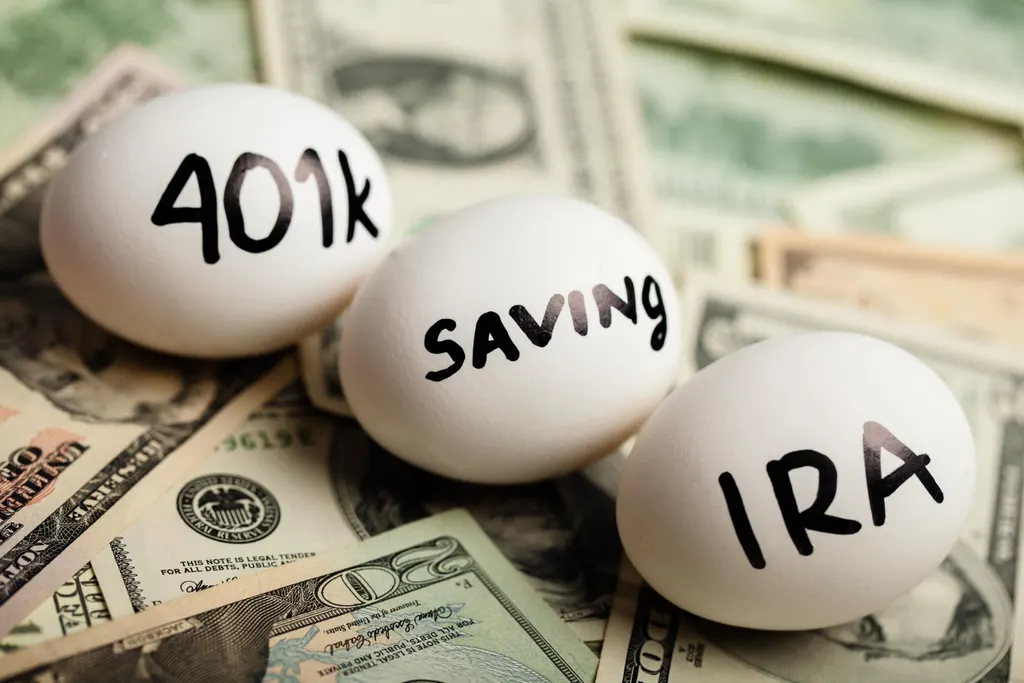
A 401(k) is a retirement plan your employer sponsors, and an IRA is an account you open on your own at a bank or brokerage. The core difference between a 401(k) and an IRA comes down to who runs the account, how much you can put in, and how many investment choices you get. Both are designed to help you save for retirement with tax benefits, but the rules around each one are not the same.
This guide walks through what each account is, how they compare side by side, and where people tend to mix them up. It is educational information only, not financial advice. Investing involves risk, including the possible loss of the money you put in.
What a 401(k) actually is
A 401(k) is a workplace retirement plan. Your employer sets it up, picks the menu of investments, and handles the paperwork. You decide how much of each paycheck to contribute, and that money comes out before it hits your bank account. Many employers also add a matching contribution, which means they put in some money of their own when you contribute. That match is one of the features that makes a 401(k) different from an account you open alone.
Because it is tied to a job, a 401(k) travels with your employment, not with you. If you leave, you generally stop contributing to that plan. You can leave the money where it is, move it to a new employer's plan, or roll it into an IRA. The IRS sets an annual limit on employee 401(k) contributions, adjusted most years for inflation, at about $24,500 for 2026, with an extra catch-up amount for people age 50 and older.
What an IRA actually is
An IRA stands for individual retirement arrangement. You open it yourself at a bank, credit union, or brokerage, and you control the investments inside it. There is no employer involved and no match. That independence is the trade-off: you get more say over what you hold, but nobody is adding to your balance on your behalf.
IRAs come in two main tax flavors. A traditional IRA may let you deduct contributions now and pay taxes when you withdraw in retirement. A Roth IRA works the opposite way: you contribute after-tax money, and qualified withdrawals in retirement can be tax-free. The IRS caps combined contributions across all your traditional and Roth IRAs at about $7,500 for 2026, plus a catch-up amount at age 50 and up. That limit is much lower than the 401(k) limit, which is one reason some people use both.
Side-by-side comparison
The table below lines up the features that matter most for a beginner trying to tell these two accounts apart.
| Feature | 401(k) | IRA |
|---|---|---|
| Who sets it up | Your employer | You, on your own |
| 2026 contribution limit | About $24,500 (plus catch-up at 50+) | About $7,500 combined across IRAs (plus catch-up at 50+) |
| Employer match | Often available | Not available |
| Investment choices | Limited to the plan's menu | Wide range at most brokerages |
| Tax treatment | Traditional or Roth, depending on the plan | Traditional or Roth, your choice |
| Income limits on Roth | Generally none for Roth 401(k) contributions | Roth IRA contributions phase out at higher incomes |
One more difference worth knowing: a 401(k) is funded straight from payroll, so the money never sits in your checking account first. An IRA is funded by you, which means you have to move the money yourself, usually by a transfer or deposit from a linked bank account.
Worked example: Maya splits her savings
Maya is 34 and earns $72,000 a year. Her employer offers a 401(k) with a dollar-for-dollar match on the first 4% of pay she contributes. She wants to know how the two accounts would look if she used both.
Step 1: Her match. Four percent of $72,000 is $2,880. If she contributes at least that much, her employer adds $2,880 to her 401(k) for the year. That is money she would not get from an IRA.
Step 2: Her 401(k) contribution. She decides to put in 8% of pay. Eight percent of $72,000 is $5,760. That is well under the $24,500 limit, so no cap issue.
Step 3: Her IRA contribution. She also opens a Roth IRA and contributes $3,000 for the year. That is under the $7,500 combined IRA limit, so she is fine there too.
Step 4: Her total retirement savings for the year. Add it up: $5,760 from her 401(k) plus $2,880 from the match plus $3,000 into the IRA equals $11,640.
| Item | Amount |
|---|---|
| Maya's 401(k) contribution (8% of $72,000) | $5,760 |
| Employer match (4% of $72,000) | $2,880 |
| Roth IRA contribution | $3,000 |
| Total saved for the year | $11,640 |
Notice that the match alone is $2,880, which is more than half of what she put into the IRA. That is the practical gap between the two accounts. If you want to see how contributions grow over decades, a compound interest calculator can show the math.
How to tell which account you are looking at
The fastest way to tell them apart is to ask who opened it. If the account came through a job and the money comes out of payroll, it is a 401(k) or a similar workplace plan like a 403(b) or 457(b). If you filled out an application at a brokerage and picked your own funds, it is an IRA.
Another clue is the contribution limit. If the annual cap is in the low five figures, you are looking at a workplace plan. If the cap is in the single-digit thousands, it is an IRA. And if there is an employer match listed on your statement, that is a workplace plan feature, since IRAs do not have matches.
Rollovers blur the line a little. When you leave a job, you can move a 401(k) balance into an IRA. After that, the money sits in an IRA and follows IRA rules. The account type changed even though the dollars did not.
What people get wrong about 401(k)s and IRAs
Mistake 1: Assuming the higher limit means the 401(k) is always the better account. The 401(k) limit is much larger, but the investment menu is usually narrow and may carry higher fees than a brokerage IRA. A bigger cap does not automatically mean a better deal.
Mistake 2: Thinking an IRA is only for people who are self-employed. Anyone with earned income can generally open an IRA, whether they also have a 401(k) at work or not. Having a workplace plan does not lock you out of an IRA.
Mistake 3: Forgetting that the IRA limit is combined, not per account. If you have a traditional IRA and a Roth IRA, the $7,500 figure covers both together. Opening a second IRA does not double your limit.
Mistake 4: Confusing a rollover with a contribution. Moving a 401(k) balance into an IRA is a rollover, and it does not count against your annual IRA contribution limit. Only new money you add counts.
Where this leaves you
A 401(k) is a workplace plan with a higher contribution limit and often an employer match, while an IRA is a self-directed account with a lower limit and more investment choices. The two are not rivals; many people use both. The right mix depends on your income, whether your employer matches, and what investments you want to hold. For a closer look at how retirement accounts fit into a broader plan, see the investing hub and the money hub.
Editorial note: Interest rates and economic data can change frequently. Figures in this article are based on the latest publicly available data at the time of publication and should be checked against the cited primary sources for the most current values.
Key takeaways
- A 401(k) comes from your employer; an IRA you open on your own at a bank or brokerage.
- The 2026 401(k) employee limit is about $24,500, while the combined IRA limit is about $7,500.
- Employer matching is a 401(k) feature; IRAs do not offer a match.
- IRAs generally give you more investment choices than a workplace plan's menu.
What This Means For Your Money
How this could affect the money decisions in front of you.
Contribution limits
The 401(k) employee limit is much higher than the combined IRA limit, so the account you pick affects how much you can shelter each year.
Employer match
A match adds money to a 401(k) that an IRA cannot replicate, which changes the total saved for the same paycheck contribution.
Put it to work
Frequently asked questions
Can I have both a 401(k) and an IRA at the same time?
Does an employer match count toward my 401(k) contribution limit?
What happens to my 401(k) if I change jobs?
Is a Roth IRA the same as a Roth 401(k)?
Sources
Was this helpful?
Written by Mohammed Salman — Founder & Editor, MoneyPilot
Mohammed Salman founded MoneyPilot and writes and edits every guide on the site. He explains how US consumer finance works in plain English, starting from primary sources (the CFPB, the Federal Reserve, the FDIC and NCUA, the SEC and IRS) and labels every estimate and example as illustrative. He is not a licensed financial adviser; MoneyPilot is educational information, not advice. See the editorial policy for how each guide is researched, fact-checked, and kept current.
More from Mohammed Salman →Reviewed by zenah bashtawi — Financial reviewer
This article is educational information only. It is not financial, investment, or tax advice. Investing and cryptocurrency involve risk, including the possible loss of principal. Verify details with a qualified professional. It was drafted with AI assistance and fact-checked and edited by Mohammed Salman before publication; see our Editorial Policy.
Your Next Money Move
Based on what you just read, take the next step toward a smarter money decision.
More in Investing

Investing
How Does Dollar-Cost Averaging Work? DCA Explained
A beginner's guide to investing a fixed amount on a regular schedule, how the math averages your share price, and what it does not do.

Investing
What Is an Expense Ratio and Why Does It Matter?
A fund's expense ratio is the yearly fee taken from your investment. Here's how it works and why small differences add up.

Investing
How does a 401(k) employer match work?
Learn how employer matching works, including formulas, vesting, and examples.

Investing
ETF vs. mutual fund: What's the difference?
Both pool your money into many investments, but they trade differently and have different costs.